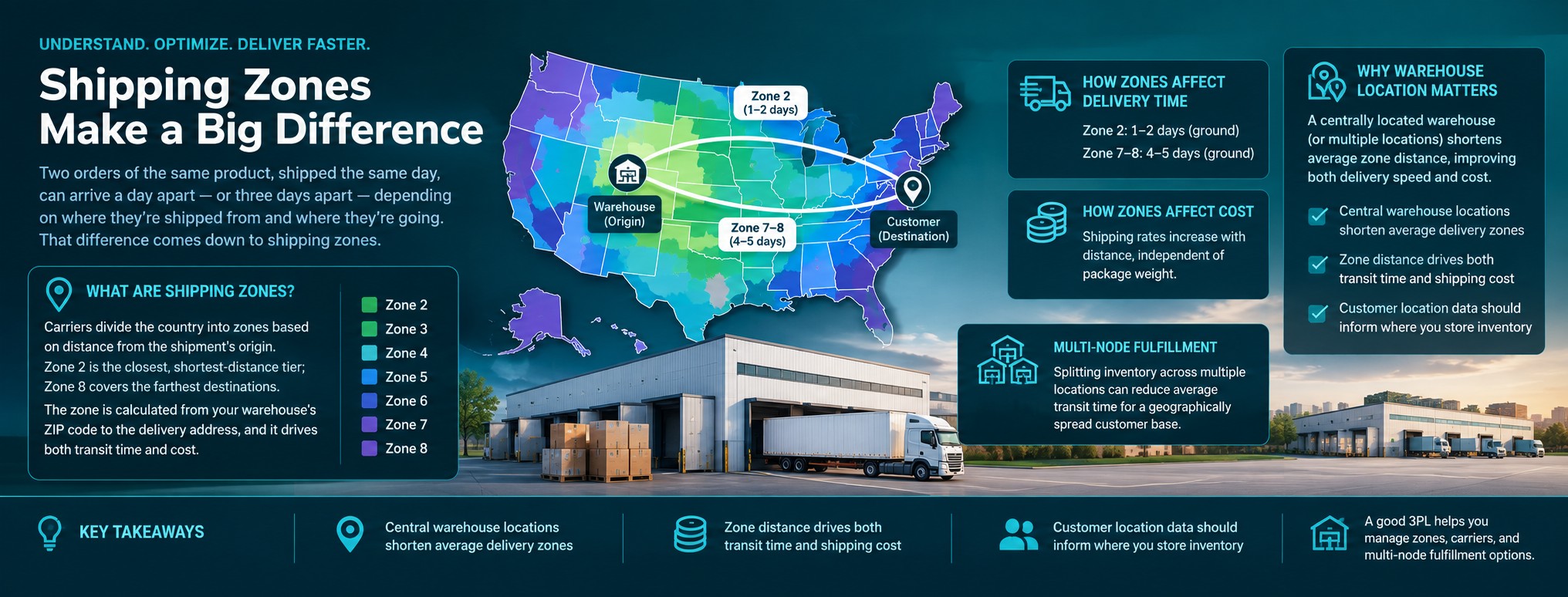
Two orders of the same product, shipped the same day, can arrive a day apart — or three days apart — depending on where they're shipped from and where they're going. That difference comes down to shipping zones, one of the more overlooked factors in ecommerce delivery performance.
What Shipping Zones Are
Carriers divide the country into zones based on distance from the shipment's origin. Zone 2 is the closest, shortest-distance tier; zone 8 covers the farthest destinations. The zone a package falls into is calculated from your warehouse's ZIP code to the delivery address, and it drives both transit time and cost.
How Zones Affect Delivery Time
A package shipping within zone 2 might arrive by ground in a day or two. That same carrier's ground service to a zone 7 or 8 destination can take four or five days. If your fulfillment center sits far from a customer, even a fast processing time at the warehouse can't fully offset a long zone-driven transit.
How Zones Affect Cost
Shipping rates increase with zone distance, independent of package weight. Brands that ship most orders into distant zones from a single warehouse are paying a real cost premium — one that's often invisible until you break down shipping spend by destination.
Why Warehouse Location Matters
Where your inventory sits determines your zone distribution to every customer. A fulfillment center located centrally, or positioned near your densest customer regions, shortens average zone distance across your order base — which improves both delivery speed and shipping cost at the same time.
- {{ICON_CHECK}} Central warehouse locations shorten average delivery zones
- {{ICON_CHECK}} Zone distance drives both transit time and shipping cost
- {{ICON_CHECK}} Customer location data should inform where you store inventory
Multi-Node Fulfillment
As order volume grows, some brands split inventory across more than one fulfillment location to shorten zones nationally rather than shipping every order from a single warehouse. This adds complexity but can meaningfully cut average transit time for a geographically spread customer base.
Questions to Ask Your 3PL
Ask where their warehouse is located relative to your customer base, what carrier services they offer by zone, and whether multi-node fulfillment is an option as you scale. A 3PL that can explain your zone distribution and its impact on delivery times is one that's actively managing shipping performance, not just processing orders.
Want Faster Delivery to Your Customers?
Tell us where your customers are and we'll map out the fastest fulfillment setup.