Most ecommerce brands don't think much about how their inventory is physically stored — until storage fees show up higher than expected, or picking turns out slower than it should be. Pallet and carton storage solve different problems, and choosing the right one for each SKU can meaningfully affect both cost and fulfillment speed.
Why Storage Type Matters
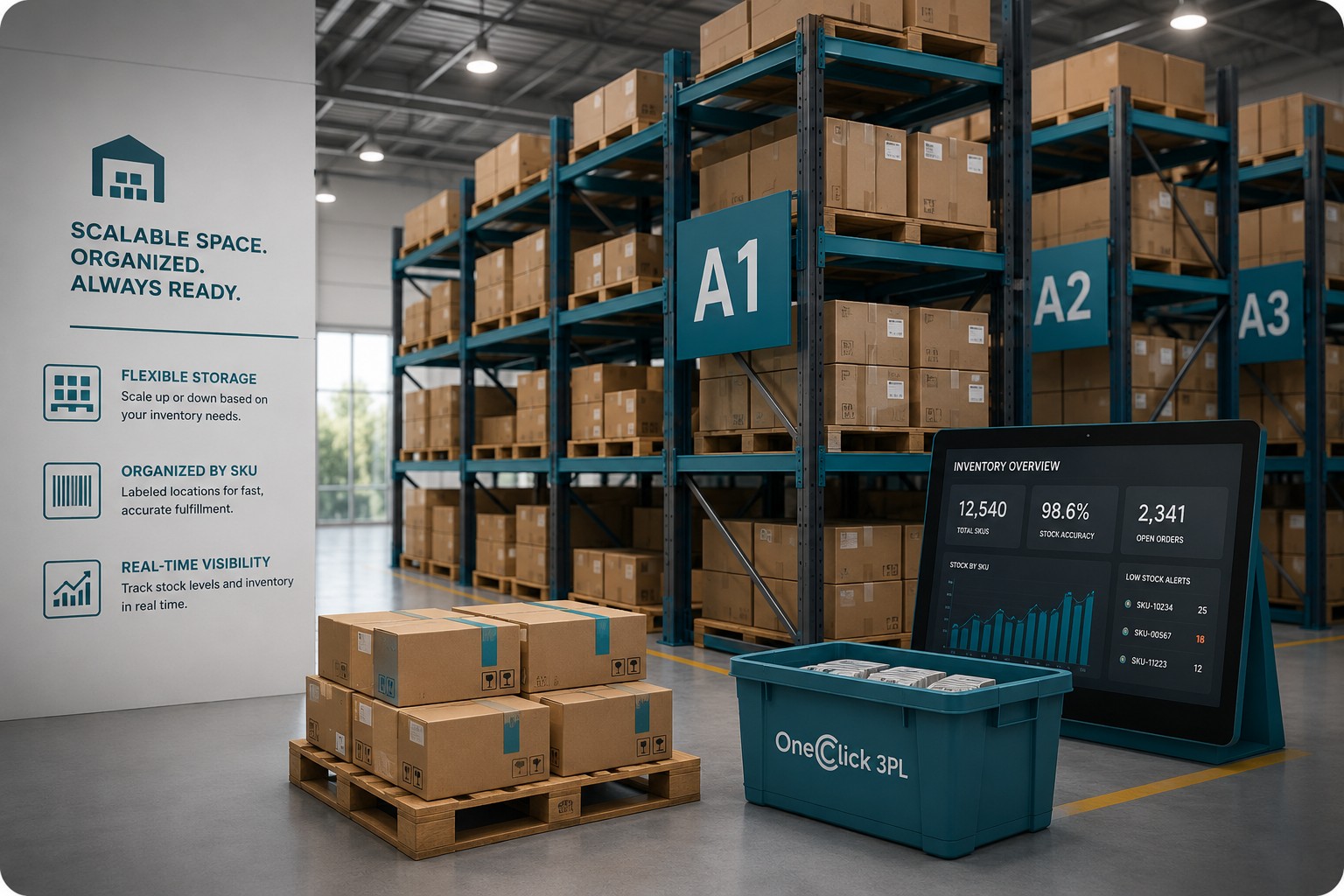
Storage type affects how quickly a SKU can be picked, how much space it occupies, and how it's priced by your fulfillment center. Matching the storage method to the product — rather than defaulting to one method for everything — is one of the simpler ways to control fulfillment costs as volume grows.
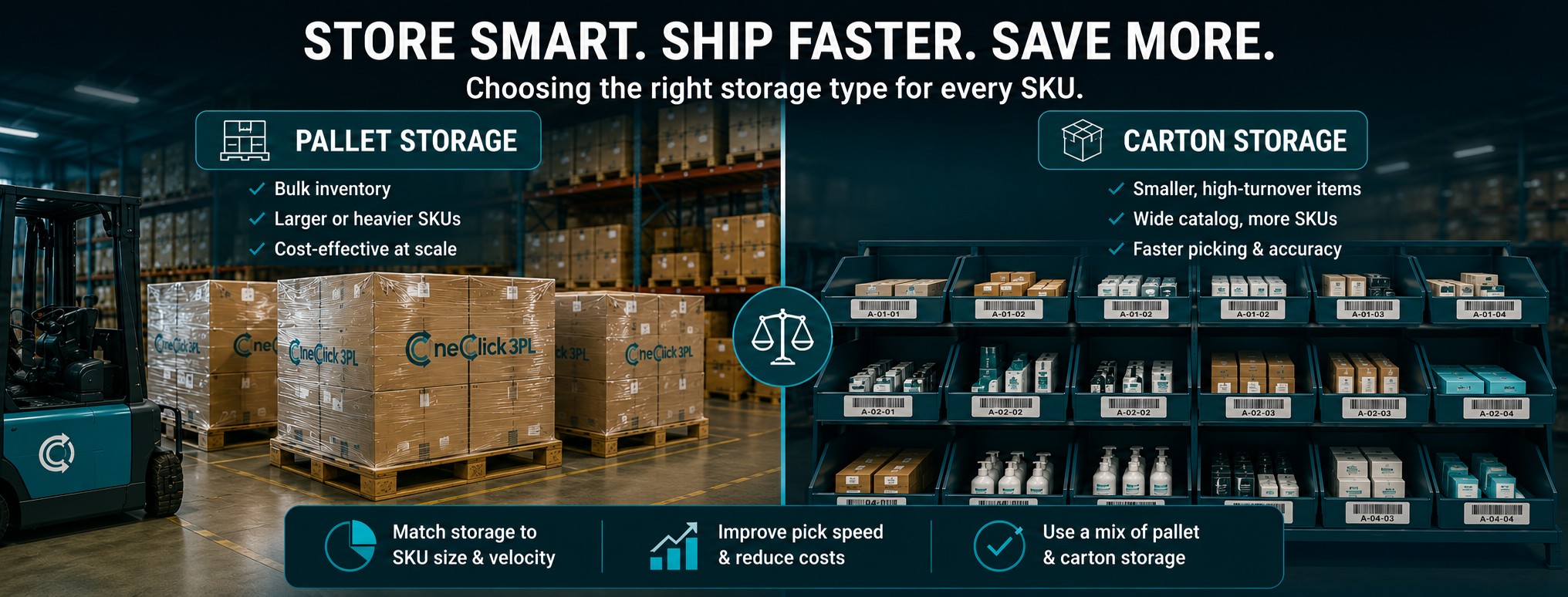
When Pallet Storage Makes Sense
Pallet storage is built for bulk. It's the right fit for high-volume SKUs, larger or heavier products, and inventory that arrives and moves in bulk quantities. Palletized storage is typically priced per pallet position per month, which tends to be more cost-effective at scale than storing the same volume by the carton.
When Carton Storage Makes Sense
Carton storage suits smaller, higher-turnover products and brands with a wide catalog of SKUs that each move in smaller quantities. It allows for more granular, bin-level organization, which usually means faster, more accurate picking for lower-volume items than breaking down a full pallet would.
- {{ICON_CHECK}} Pallet storage: bulk inventory, larger or heavier SKUs
- {{ICON_CHECK}} Carton storage: smaller, high-turnover, high-SKU-count catalogs
- {{ICON_CHECK}} Most brands use a mix of both across their catalog
Letting Your SKU Mix Decide
Rather than choosing one storage type for your entire catalog, look at each SKU's size, weight, and order velocity. Your fastest-moving, smaller items are usually better served by carton storage for pick speed, while bulkier or slower-moving inventory is often more efficient palletized.
Cost Considerations
Ask your 3PL how each storage type is priced and how that scales with volume. It's worth modeling both options against your actual SKU mix rather than assuming one is always cheaper — the right answer usually depends on your specific product dimensions and turnover rate.
Switching as You Grow
Storage needs change as a brand scales. A SKU that starts in carton storage may move to pallet storage once order volume justifies it, and a good fulfillment partner should be able to make that shift without disrupting your operations.
Not Sure What You Need?
Tell us about your SKUs and volume — we'll recommend the right storage mix.